Stop Wasting Content Like You Waste Groceries: A Repurposing Framework for B2B Marketers
Key Highlights
- Effective content repurposing starts before the original asset is created, with a clear plan for how ideas will be adapted into other formats.
- Valuable source material can come from sales conversations, internal resources and existing content, not just published articles or videos.
- Repurposed content should be built for its specific format and able to stand on its own, rather than simply being copied or chopped down from the original.
- AI can help marketers identify new formats, promising ideas and natural breakpoints within existing content while leaving the final editorial decisions to humans.
- A structured repurposing process can help marketers get more value from content they already have instead of continually starting from scratch.
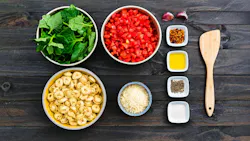
I'm the foodie of my friend group. Need a restaurant recommendation or a never-fail recipe? I've got you covered. To me, food isn't fuel. It's creative expression. It's how I show love. I plan trips around hidden-gem restaurants and viral must-try spots, photographing every plate before I let myself take a bite. I've lost hours scrolling through recipe accounts, hunting for the one dish that's perfectly in season right now. Give me a cooking competition, and I'll pick a favorite chef in the first five minutes and defend them like family. Food runs my life a little, and I wouldn't have it any other way.
That passion carries over into my own kitchen. When I first started cooking for myself, every meal was a fine dining experience. New recipe, new technique, new flavor profile — every single time. My pantry was always stocked with the good stuff, the high-end ingredients you save for something special. Except I wasn't saving them for anything. I'd use them once, for one specific recipe, and then forget they existed. It was a great way to cook. It was a terrible way to eat, and an even worse way to budget. I still remember the month I actually added up my grocery receipts and realized I'd spent more feeding myself than I had on the rest of my bills combined.
Eventually I learned to stop wasting what I bought. Sunday's roast chicken became Monday's stir-fry, then Tuesday's tacos. That bag of carrots I always let go to waste turned into a week's worth of side dishes — chips, pesto, even a stand-in for mashed potatoes. Same components. Completely different meals. Way less waste. And the secret ingredient that made this all possible? Having a plan and sticking to it.
But this article isn't about making you a better cook, or even a smarter shopper. It's about a mistake I bet you're making right now, in your content strategy. You're pouring time, effort and resources into creating content — using it once, then letting it languish like a jar of specialty pickles in the back of your fridge.
Content repurposing isn't a new idea. You've heard the pitch from every marketing guru on your feed — write it once, slice it into five pieces, watch the ROI multiply. What they leave out is the structure that actually makes it work. It's not enough to chop a long-form video into clips and hope one goes viral, or comb through an hour-long transcript expecting to find a hook strong enough to support a blog post. You need to understand the mediums — what makes a LinkedIn post different from a blog post different from a slide — and use that understanding to plan the whole family of content before you ever hit record on the first piece.
Choosing the right cut of content
When you're picking a recipe — or a repurposing strategy — everything starts with your cut of meat. Ground chuck feeds a crowd. Ribeye gets its own plate. Your content sources work the same way. Pick one, and you've already decided whether you're throwing a potluck or building a tasting menu.

Most marketers reach for the chicken thigh — blog to social post, article to email. It's safe. It's reliable. It's always on sale. I'd push you to look further down the counter, at the cuts people skip because they're niche, or awkward, or take real skill to get right. Handled well, those are the ones that turn into something people remember.
Here's what's worth a second look next time you're shopping:
- Sales call objections and questions. An objection is a buyer telling you exactly what's standing between them and a yes, which makes it the perfect raw material for comparison pages, FAQ content and objection-handling posts your competitors are still guessing at.
- Internal decks and sales enablement material. If a slide is good enough to change a prospect's mind one-on-one, it's good enough to do that same job at scale as a blog post, a LinkedIn carousel or a piece of gated content.
- Comment sections and LinkedIn replies. The questions people ask in your comments are a live list of what your audience doesn't understand yet. Answer one well, and you've got the seed of an explainer post with a built-in, proven audience.
- Old, underperforming content. A piece that flopped didn't necessarily fail on substance. It might just be waiting for the angle, example, or headline that actually gets it in front of people.
- Data or research buried mid-article. A stat that's strong enough to change someone's mind is strong enough to be the whole pitch. Pull it out, and it can anchor a graphic, a post or a standalone piece built entirely around that one proof point.
- Webinar Q&A sections. The questions people ask live, on the spot, are the ones they actually care about, which makes the unscripted Q&A a better source of new content ideas than the script you spent weeks writing.
Make a content plan before you start shopping
Here's the step almost everyone gets wrong. Most marketers assume the original piece will naturally guide whatever gets repurposed from it. And sure, there's room for spontaneity in content, but skipping the planning stage has consequences that don't show up until much later.
 One unique red ball among other white 3d
 Minimalist Solid Style Robot with Shopping Basket Concept Icon Graphic
Think of it like cooking a meal. You can grab a random assortment of ingredients and appliances and wing it, chasing some dish you saw a chef make on TV three months ago. Or, if you want results you can actually repeat, you pick a recipe built around your pantry, your time and your skill level. The first path might occasionally produce something great. It's just as likely to end up in the trash. The second path won't give you a Michelin-star surprise, but it'll give you dinner, every time.
Here's how to choose the right recipe for your campaign:
- Plan the "meals" before you plan the "shop." Decide what your source piece is becoming before you ever hit record — a video, an article, three LinkedIn posts, a slide, all mapped out in advance.
- Write your source material knowing it'll get cut up. Build in the seams on purpose — a strong stat here, a quotable line there — because you already know pieces are coming out later.
- Give yourself a repurposing checklist before you hit publish. Not after. A short list — LinkedIn post, email blurb, one quote graphic — you run through before the piece goes live.
- Batch it like a Sunday meal prep. Set aside a block of time to cut up four or five recent pieces at once, instead of repurposing one at a time as you think of it.
- Match the format to the occasion, not the other way around. Not every piece needs to be a LinkedIn post — some are graphics, some are one good line in an email. Know the difference before you start cutting.
Cooking with intention: Turning the plan into actual output
You've got your ingredients. You've got your recipe. Now it's time to actually cook. Start with the main dish — the video, the long-form article, the podcast interview — and give it your full attention. Don't rush it. This is the piece that has to be good on its own with nothing to prop it up. Put your actual perspective into it. Your analysis, your voice, the stuff that only you would say because that's what separates it from every other piece of content that could've been written by anyone.
Once the main dish is done, the real work starts — turning what's left over into next week's dinners. Here's how:
- Build a production order, not just a wish list. Knowing you want five pieces from one source is planning. Knowing the LinkedIn post ships Monday, the email Wednesday and the graphic Friday — that's execution. Without an order, everything sits on the list with the same fake urgency, and nothing actually goes first.
- Ownership beats good intentions. Assign a person and a deadline to every piece — even if that person is future-you — because "someone will get to it eventually" is exactly how a five-piece plan quietly becomes a one-piece plan.
- Block real production time on the calendar. An afternoon every other week, treated like a meeting you can't skip, gets more repurposed content out the door than good intentions ever will.
- Taste as you go. Read each piece as if you'd never seen the original. If it doesn't stand on its own, it's not done. It needs another pass before it goes live.
- Don't plate everything the same way. A quote that worked as a pull-out graphic won't automatically work as a LinkedIn hook. Fit the format to the format, not the content to the calendar.
- Keep a running list of "extras." A stat, a quote, a tangent that didn't make the original cut — save it in a holding folder instead of the trash. That's next month's raw material, already half-written.
- Close the loop after publishing. Once a piece is live, note what actually worked. That's what makes your next production order a decision instead of a guess.
Fit the format to the format, not the content to the calendar.
Let AI be your content repurposing sous chef
Great meals are rarely made in isolation. Behind every master chef is a crew of sous chefs and line cooks turning one vision into a dozen finished plates. You may not have that kind of team, but you always have AI.
AI can't decide what's on the menu. That's still you. But it's fast, it's got sharp knives and it's good at exactly the prep work that makes repurposing feel like a chore — spotting the formats hiding inside a piece, finding the one idea strong enough to stand on its own, seeing where a single article could split into three. Hand it a finished piece and ask what it sees that you don't. You'll usually walk away with at least one format you hadn't considered.
From there, let it rough out an initial outline so you're not starting with an empty plate. Cooking for more than one table? Have it prep the same idea two ways — a version for a CMO, a version for a content coordinator — so you're choosing between two plates instead of making both from scratch. Not sure if a piece has a second act? Ask it to find the natural break points, the spots where one article is actually straining to be three. Staring at a folder of old posts you haven't touched in a year? Point it there and ask what's still worth serving and what's past its expiration date.
None of this is the finished dish. It's mise en place — the chopping, the prepping, the work that happens before the real cooking starts. You still decide what goes in the pan.
Cook once, eat all week: Get more from the content you already have
Somewhere in your content archive right now, there's a bag of carrots going soft. A sales call nobody wrote down. A deck that never left the building. A comment reply you spent 10 minutes on, for an audience of one. A webinar Q&A that got recorded, filed away and never opened again. None of it is gone. It's just sitting there, waiting on a plan that never got made.
The question isn't whether you have the ingredients — you clearly do. It's whether you're going to use them before they go bad, or let them sit in the back of the pantry until you finally throw them out and start over.
About the Author
 Alexis Gajewski
Alexis Gajewski
Contributor / AI Expert
Alexis Gajewski is the Associate Director of Newsroom Operations and Development at EndeavorB2B, where she leads editorial strategy and AI integration across a portfolio of 80+ B2B brands and 150 editors. With 18+ years in B2B media, she is best known for building the systems, training programs, and organizational infrastructure that help editorial teams operate at a higher level — faster, smarter, and with clearer standards.
Her expertise spans the full editorial stack — from SEO, GEO, and analytics to AI literacy, content strategy, and journalistic standards — with a particular focus on translating emerging technology into practical frameworks editorial teams can actually adopt. She designs and delivers training programs that meet teams where they are and build toward where the industry is going, with a specialty in AI integration that covers everything from foundational literacy to advanced workflows and agentic applications. A frequent guest on ASBPE webinars, Alexis is a recognized voice on the intersection of journalism and AI, and she writes for marketers, editors, and authors on how to thoughtfully and strategically implement AI practices.
 Resources
Quiz
 Your Competitive Edge, Delivered
Elevate your strategy with weekly insights from marketing leaders who are redefining engagement and growth. From campaign best practices to creative innovation and data-driven trends, MarketingEDGE delivers the ideas and inspiration you need to outperform your competition.
